First, a quick clarification, since the naming trips people up: "35mm" is sometimes called "135 film" (that's just the Kodak designation), while the larger format most photographers mean by "medium format" is shot on 120 or 220 roll film — not 135mm at all. Medium format bodies typically expose 6x4.5cm, 6x6cm, or 6x7cm negatives.
I came up developing both formats by hand. There's a particular thrill in watching a 35mm negative surface in the tray, grain already visible before the frame fully resolves — and a different one in holding a 6x6cm medium format negative up to a window and feeling how much bigger it is in your hand. Neither format is "correct." They're just different tools, and for direct-flash elopement coverage, I reach for both depending on the moment.
the technical differences
negative size
The obvious difference is physical: a 35mm frame is 24x36mm, a 6x6cm medium format negative is 56x56mm — roughly four times the surface area. More surface area means more captured detail, tighter grain, and a wider tonal range once it's printed or scanned.
It's a bit like choosing a canvas size for a portrait. A small canvas and a large one can both hold a masterpiece, but the larger one gives you more room to work subtle gradations of light.
grain and texture
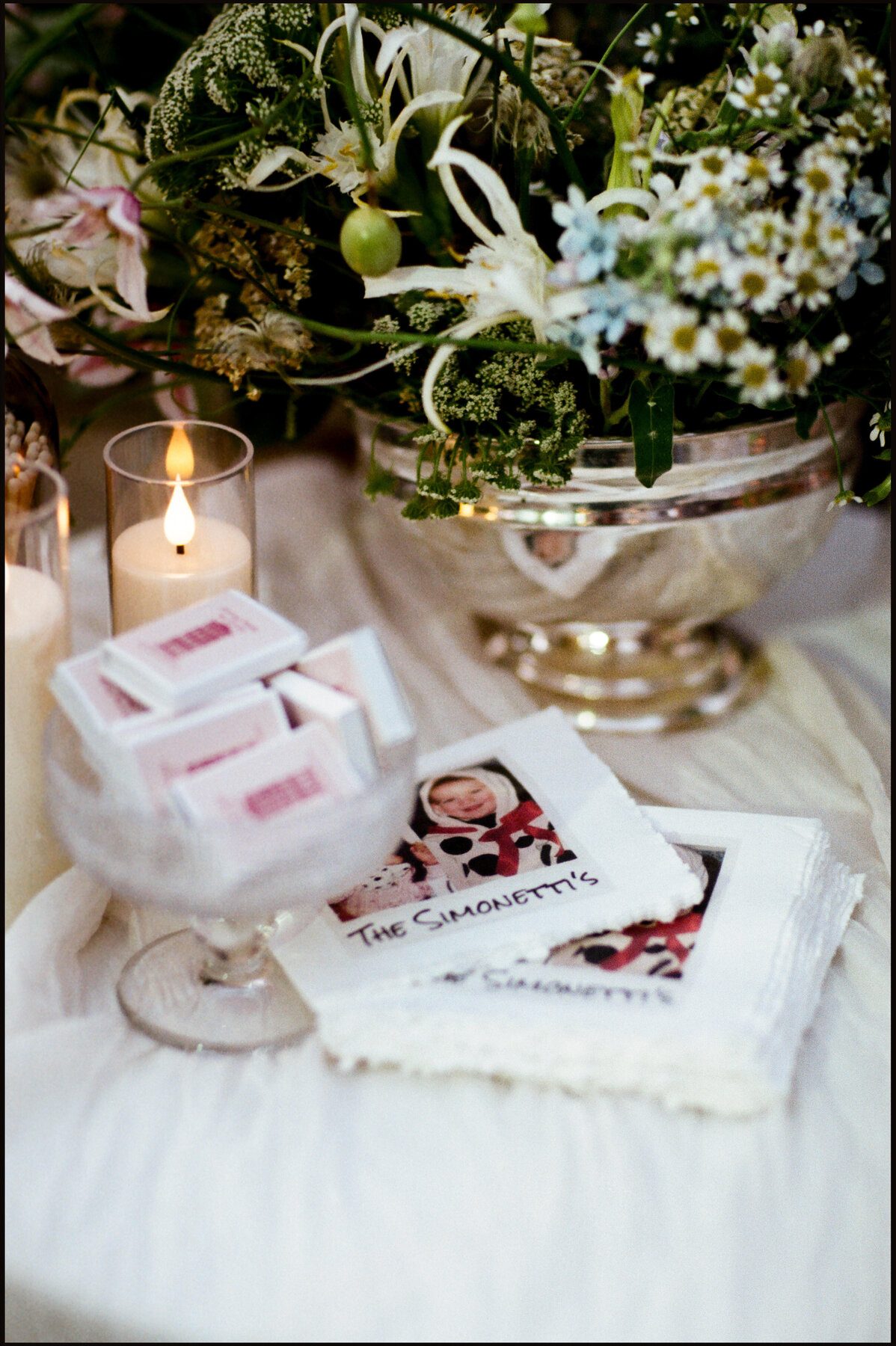
Here's the part elopement couples usually don't expect: 35mm reads grainier not because the stock itself is grainier, but because a smaller negative needs more enlargement to print at the same size. That grain is exactly what gives 35mm its kitschy-retro, soft-texture charm — a tactile warmth digital simply doesn't have.
Medium format, blown up to the same print size, needs less enlargement, so the grain stays finer and the tonal shifts stay smoother. The look ends up almost painterly — soft, dreamlike, a little suspended in time.
depth of field and bokeh
Because the negative is larger, medium format renders shallower depth of field at a matching aperture — a portrait at f/2.8 on medium format pulls the subject forward with creamier, softer background blur than the same f/2.8 frame on 35mm.
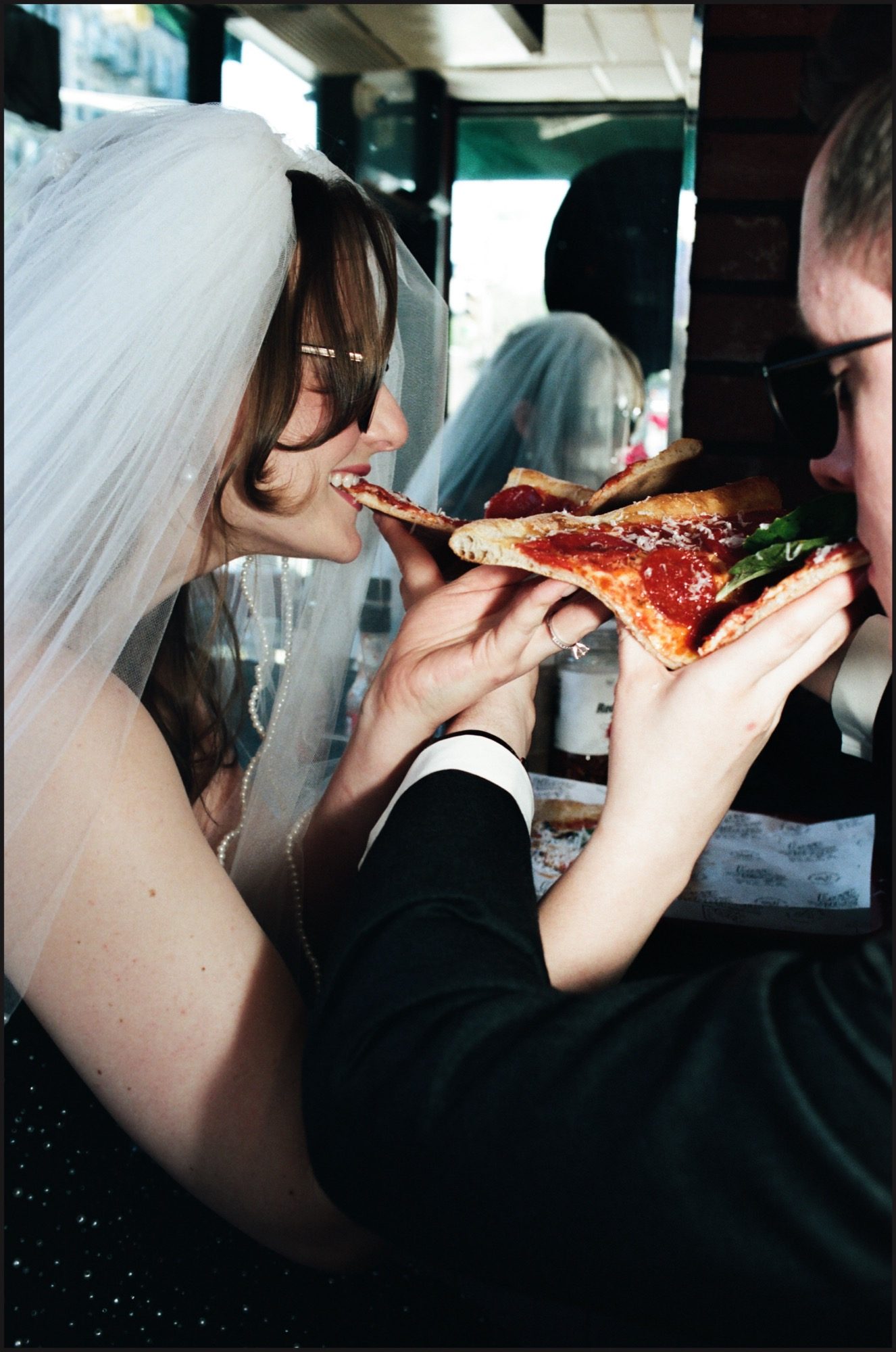
For an elopement, that distinction shows up fast. Medium format is beautiful for that dreamy, romantic separation in a still portrait. 35mm at a wide aperture gets you close, with a bit more energy and a bit less polish — which is often exactly right for a direct-flash, in-the-moment city hall shot.
the practical considerations
cost
Medium format isn't cheap, plainly. The bodies cost more, the film costs more, developing and scanning cost more. Shooting an entire elopement on medium format alone means being very selective about every frame, which risks losing the spontaneous stuff. 35mm gives more frames per roll and more room to actually chase the moment.
speed and spontaneity
35mm bodies are lighter and quicker to bring up to your eye, which matters when a courthouse elopement moves fast and doesn't wait around. Older medium format bodies — Hasselblads, Mamiyas — ask for more deliberateness: manual focus, a slower rhythm, each frame costing enough that you think before pressing the shutter.
For candid, documentary-style elopement coverage, that 35mm speed is a real advantage. For a composed portrait after the vows, medium format's slower pace can work in your favor — it forces everyone to actually settle into the frame.
when i reach for each format
35mm is my default for elopement day itself, because spontaneity is the whole point. I want the half-second someone's face breaks into a laugh, the blur of a spin outside city hall, the stolen glance on the courthouse steps. 35mm keeps me quick enough to catch it.
Medium format earns its place in the quieter portrait moments — the softness in how it renders skin and light, a dreaminess that almost feels like a memory already. When there's a beat of stillness to work with, medium format is a gorgeous choice.
choosing on feel, not specs
The technical specs matter less than one question: what feeling do you want the images to hold? 35mm reads energetic and lived-in — the grain saying, plainly, this happened. Medium format reads composed and dreamlike, with a stillness even inside motion.
Neither wins. They're two different vocabularies for the same story. Some elopement moments want the rawness of 35mm. Others deserve medium format's quiet. Knowing which to reach for, and when, is most of the job.
my honest recommendation
If you're weighing film for your city hall elopement, skip the format debate entirely and ask your photographer what they actually shoot, and why. Look at real galleries. Does the grain add to the feeling, or fight it? Does the texture match the mood you want your day to have?
Film, in either format, asks for intention. It costs more. There's real risk in not seeing results right away. What you get back is texture and permanence digital hasn't matched yet — something that still feels tactile years later.
That's the part worth chasing. Not negative size, not grain count. The feeling. The proof that something real happened, and someone thought it was worth holding onto on silver and light.