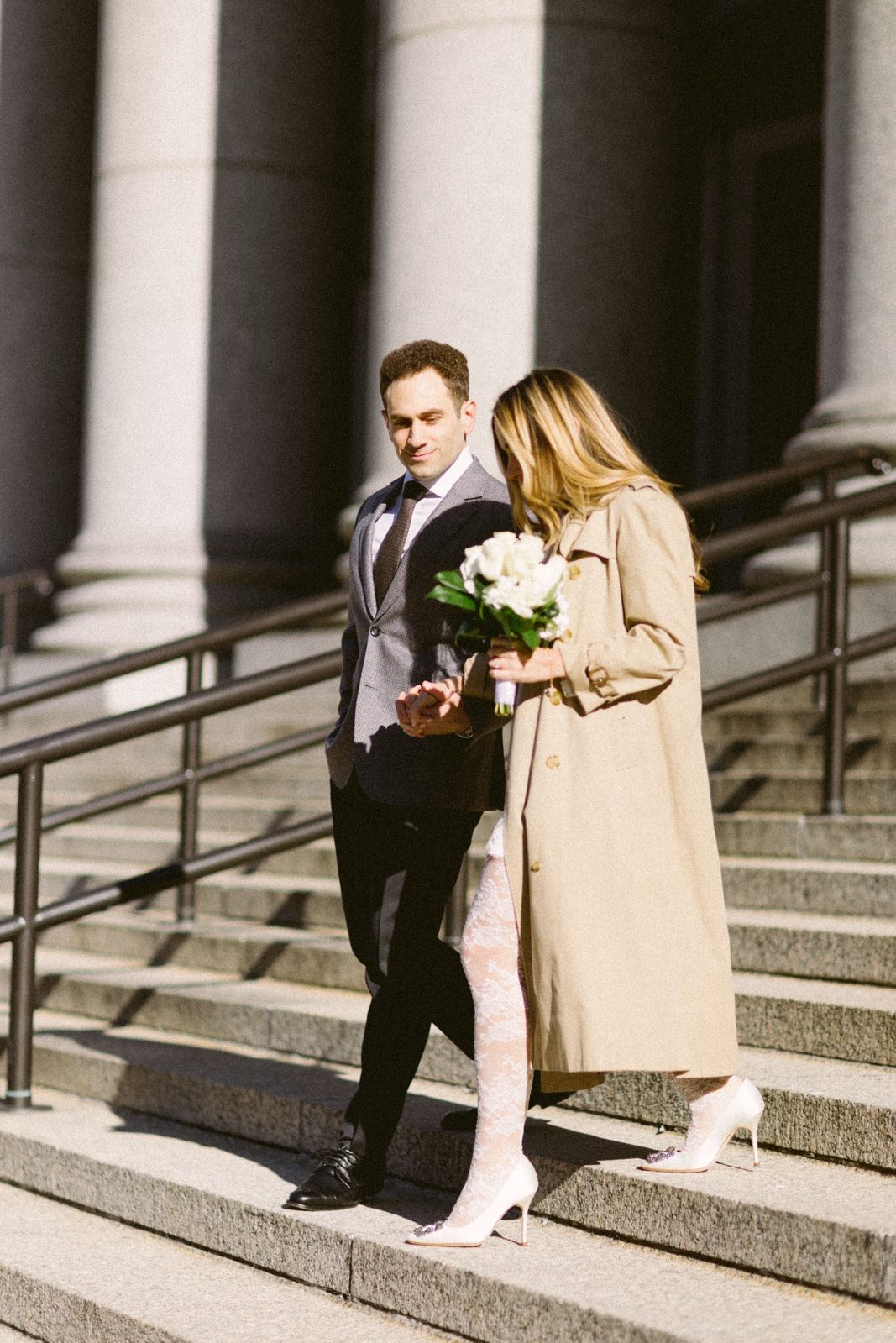
The first city hall elopement I shot documentary-style, I said maybe ten sentences to the couple the entire morning. Introduced myself, confirmed the timeline, then quietly disappeared into the courthouse hallway. No direction. No interruptions. Never once "can you do that again, but toward the camera."
Afterward, on the courthouse steps, one of them turned to me and said, "wait, I forgot you were even here." That's the whole point of documentary elopement photography — present, but invisible. You record what's actually happening instead of quietly reshaping it.
what documentary style actually means
Documentary elopement coverage borrows straight from photojournalism: watch, don't interfere. Let reality unfold on its own schedule. Real moments over composed ones, every time. The story you get back is the one that actually happened, not the one that photographed best.
Compare that to a directed shoot, where the photographer runs the room — "turn this way, now walk slowly toward me, hold hands here." I don't direct at a courthouse elopement. I read the room and get into position before the moment lands, which is the real difference between building a photo and finding one.
the ethics of staying out of the way
Photojournalism runs on a strict code: no staged scenes, no asking someone to redo a moment for the lens, document the day even when it's a little messy. Documentary elopement photography leans on the same code, with slightly more room to move — I'll quietly step a stray umbrella out of frame, but I won't ask you to perform a feeling you're not having.
If the laugh isn't real, I'm not chasing it. What I hand back is an honest record of how your elopement actually went, not a version I decided looked better.
anticipation is the whole job
People assume documentary work is passive — point, shoot, done. It's the opposite. Good documentary coverage is constant motion. Being in the right spot at the right second means reading a room's energy and getting there a beat before the moment does.
I'm tracking body language the whole time. The second before someone's eyes well up signing the license. The half-breath before a real laugh breaks out on the courthouse steps. I find where the light is doing something good, then wait for the moment to walk into it.
reading a courthouse elopement
Where's the energy building? Who's about to do something unplanned? At a small elopement, I'm watching the edges just as much as the couple — the one friend who came along as witness, tearing up mid-vow. That kind of moment can't be cued. You're only ready for it if you were already watching.
letting imperfect stay imperfect
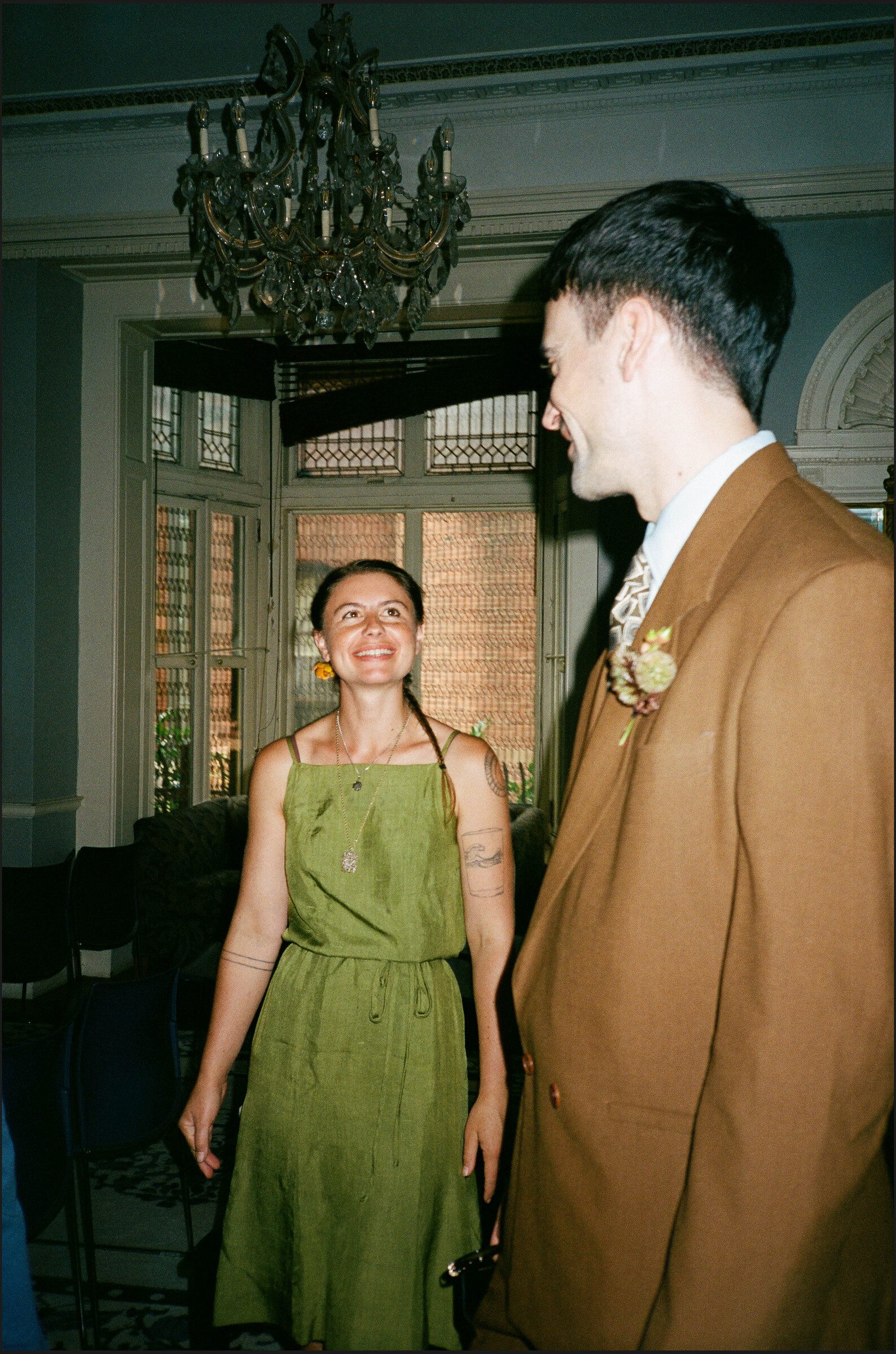
Documentary elopement images aren't always technically flawless. Sometimes there's motion blur, because the moment itself was fast. Sometimes the frame's off-center, because that's genuinely where the moment happened.
I'd rather hand you a slightly soft frame of a real laugh than a razor-sharp frame of a performed smile. That imperfection is part of the story — proof something real just happened in front of the flash.
what this style won't give you
You won't get a perfectly lit group shot with everyone facing camera at once — that takes staging and multiple takes, which isn't the point here. You won't get a golden-hour portrait with every hair placed just so, unless it happens on its own; I move with the day, I don't pause a city hall elopement for a long portrait session. And you won't get a spread of styled flat-lays of the rings and paperwork. If a detail is genuinely part of the day, it gets documented as it sits.
the middle ground: guided documentary
Fully hands-off documentary coverage is rare in practice. Most couples land somewhere in between: real, candid moments, with a light guiding hand on the handful that matter most. That's "guided documentary" — mostly observing, but I might quietly steer you two toward better light before the vows, or point out a good spot on the courthouse steps and then just let what happens, happen.
The difference is how light-touch it stays. I'm not running the elopement like a director. I'm nudging you into better light so the real moment has a better stage — never asking you to fake a feeling for the camera. That line doesn't move.
why documentary style is the harder path
A traditional wedding shoot runs on a script. Documentary elopement coverage runs on constant attention instead — no real script, no way to predict exactly what happens next, staying ready while staying out of frame. By the end of even a short courthouse elopement, my feet are tired from repositioning all morning, and I've usually shot far more frames than end up in the final gallery.
But what comes out the other side is honest. It shows how the day actually felt, not how I thought it should look.
who this is for
Couples who trust the process. Who'd rather have something real than something perfectly posed. Who go stiff the second someone says "now gaze at each other lovingly." Who want to actually experience their city hall elopement instead of performing it for a camera.
what to expect
Expect to mostly forget I'm there — watching, rarely directing, easy to lose track of for long stretches. That's on purpose. Expect a gallery that shows your elopement as it actually happened: a little imperfect, genuinely emotional, and quietly beautiful. Expect to look back and remember not just what happened, but exactly how it felt.