digital-first vs. film-first, in practice
Most elopement photographers shoot digital-first: hundreds of frames across the morning, culled down afterward to the set that makes the final gallery. That's a completely legitimate way to work, and done well it produces beautiful results.
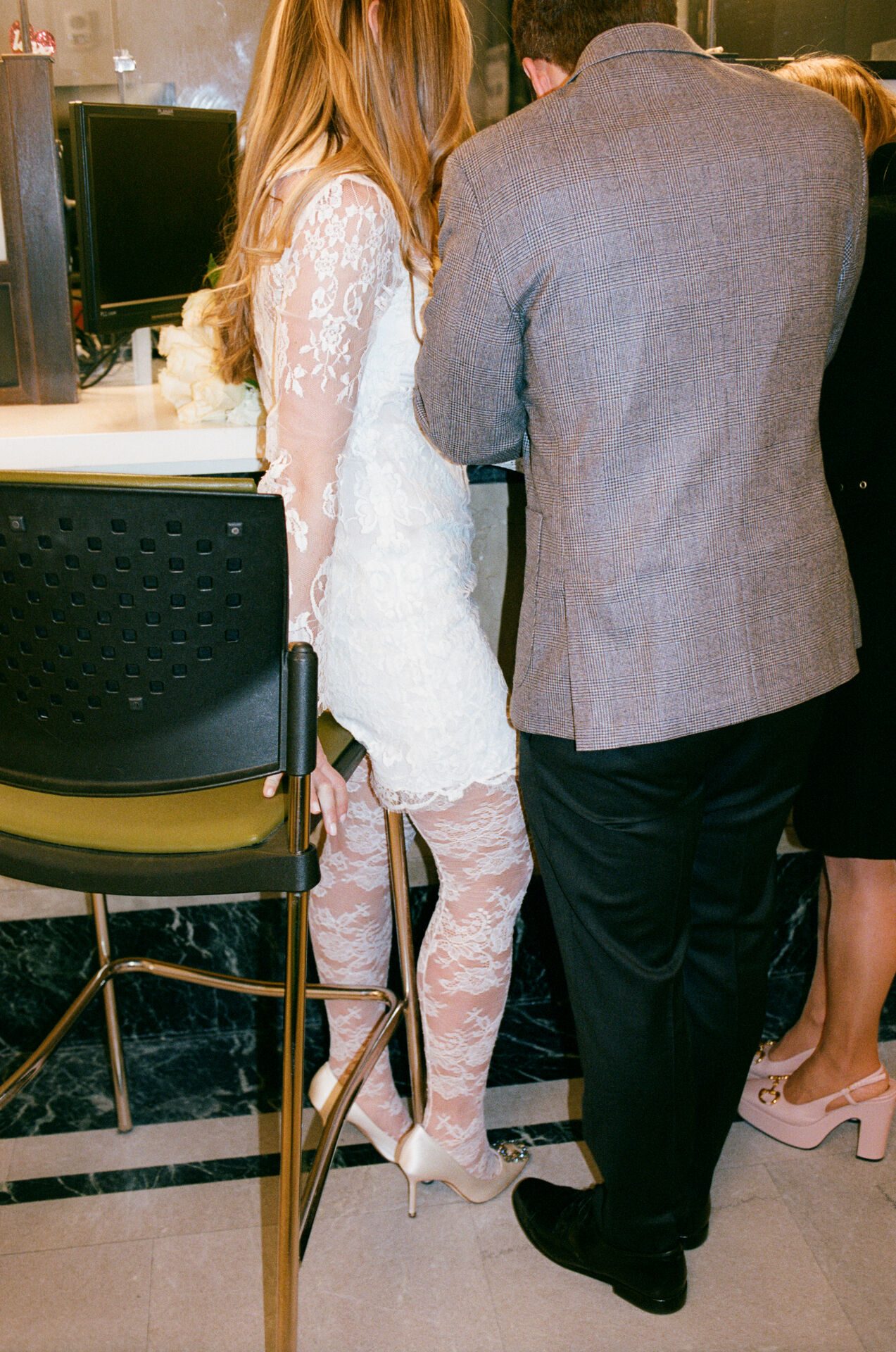
Film-first is a different discipline, not just a different camera in hand. A roll of 35mm holds 36 exposures. That limit changes how a photographer moves through a courthouse hallway: less spraying a moment hoping one frame lands, more waiting for the specific second worth spending a frame on. It's slower and more deliberate, because the format forces it to be.
what that means for you as a couple
In practice: fewer near-identical shots of the same handshake outside the clerk's office, and more of a photographer who's actually watching instead of buried behind a viewfinder firing continuous bursts. Your one friend along as witness notices the difference too — a camera that isn't machine-gunning every few seconds reads calmer, less intrusive, more like someone who's actually there with you.
It shapes the final gallery too. Film's grain and tone carry a warmer, kitschy-retro, soft-texture character straight out of the camera that digital doesn't quite match, and there's something to knowing every frame was a deliberate call, not one of nine near-identical shots.
None of this knocks digital. I shoot it too, and lean on it specifically where film hits real limits: very low light once you're indoors past golden hour, fast-moving moments that need more than 36 tries, and same-day social previews before scans are even back from the lab. Film is my default for direct-flash elopement coverage, digital is the backup, and that order matters more than whichever body happens to be in my hand at a given second.
the honest tradeoffs
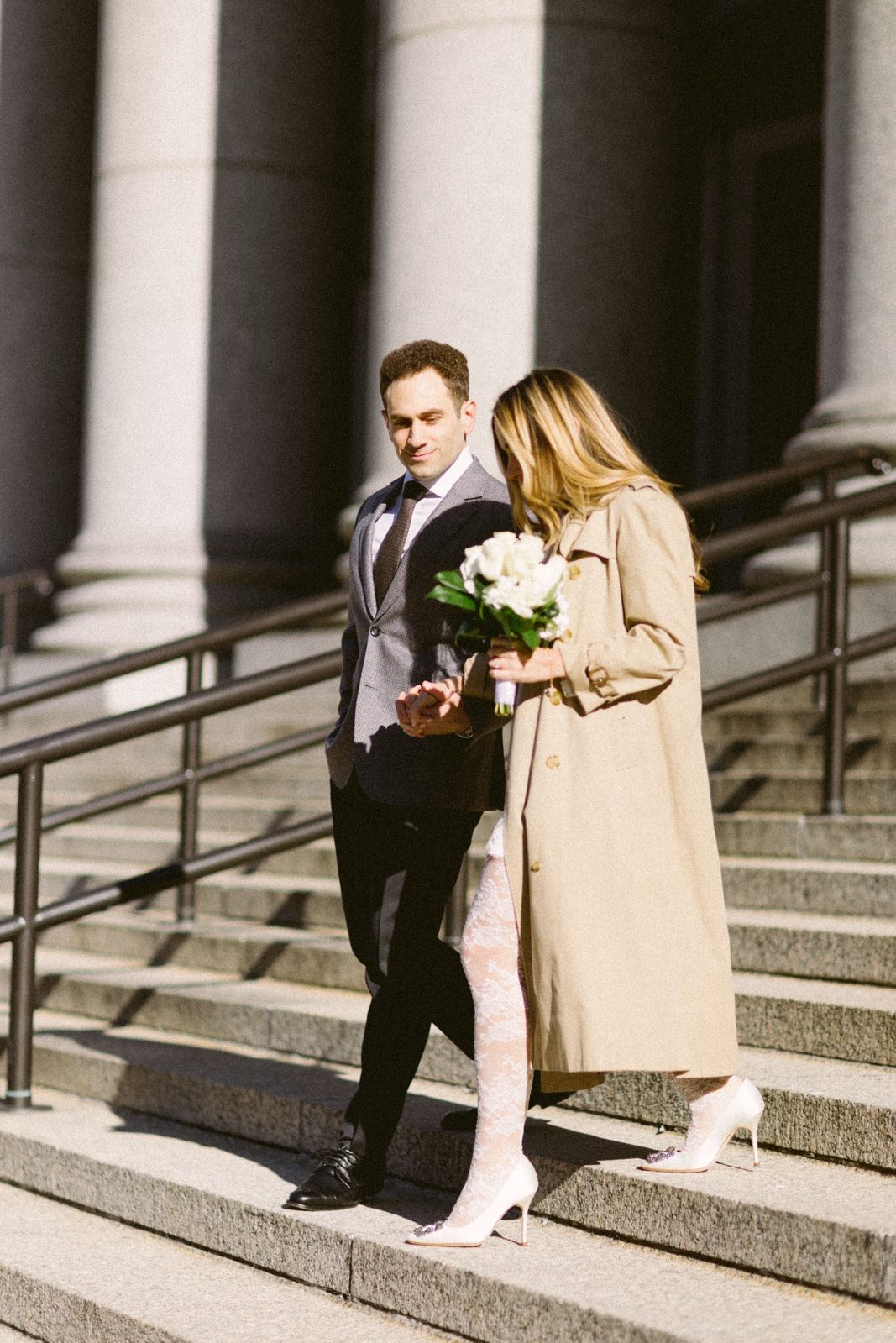
Film-first isn't right for every couple, and I'd rather say that plainly than oversell it. A few real tradeoffs:
- No instant preview. I can't check the back of the camera mid-ceremony. Exposure and framing have to land right the first time, which is exactly why experience matters as much as the gear.
- Turnaround takes longer. Film needs developing and scanning before you see a single frame, which adds real time next to a digital gallery I could technically deliver the next morning.
- Cost per frame runs higher. Film, processing, and scanning cost real money, and that's baked into how film-first elopement coverage is priced.
- It struggles in true darkness. A dim indoor courthouse hallway or a late-night celebration afterward is where digital earns its keep, which is exactly why film isn't a purity test for me — I bring both.
why turnaround takes what it takes
Every roll gets developed and scanned before it becomes anything you can see. That's real, unhurriable time, not a stalling tactic. I'd rather set that expectation honestly upfront than leave you wondering why the gallery isn't in your inbox the next day.
so is digital just as good?
Honestly, for a lot of what a city hall elopement needs: yes, digital done well is wonderful, and I use it constantly. What film specifically brings is a distinct visual character (grain, tone, a certain permanence to it) and a different practice on the day itself: more intention, less volume. If that's the trade you're after, film-first is worth it. If what you want most is a same-week gallery of hundreds of options, that's a completely fair thing to want, and worth a direct conversation with whoever you book.
frequently asked
Do you shoot 100% film, or a mix?
Film is my default and primary format for elopements. Digital comes in selectively, for very low light and fast-moving moments film can't reach — not the other way around.
How long until I see my photos?
Longer than an all-digital photographer, because of real development and scanning time. I'll give you a specific timeline directly, so there's no guessing.
What if something goes wrong with the film?
Rare, and exactly why I don't shoot film-only for a day that matters this much. Digital backup exists precisely for that reason.
Is film-first more expensive?
Typically, yes, given the real cost of film and processing. See real pricing here.
Want to talk through whether film-first is right for your elopement? I'd love to hear about it.